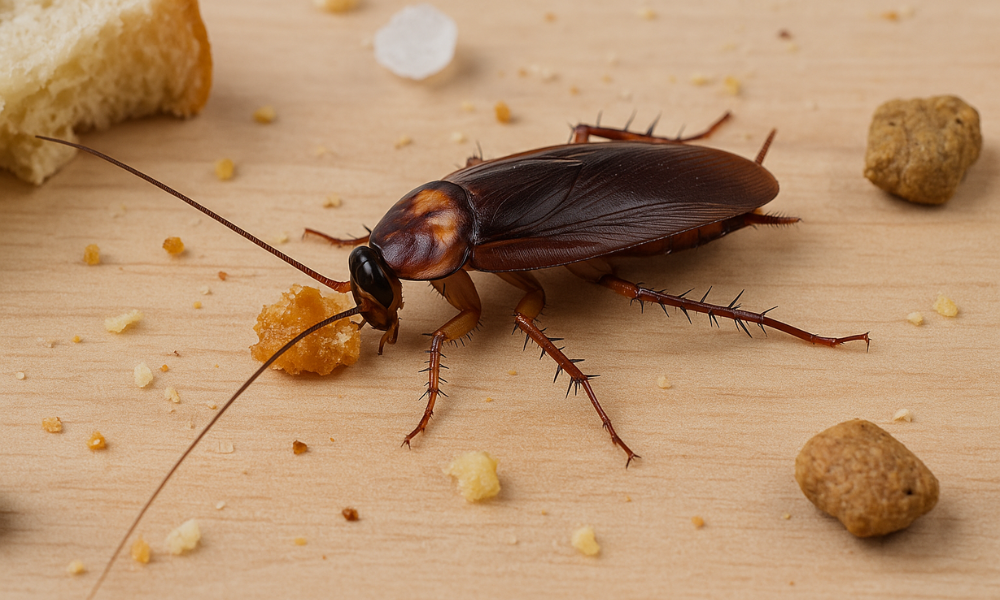
Many people ask what do cockroaches eat because their diet explains a lot about their movement and presence inside a home.
Cockroaches stay close to places that give them easy food, water, and hidden space. Their eating habits guide where they hide, how fast they grow, and how long they remain inside a kitchen or bathroom.
When you know what cockroaches eat, you can control the areas that attract them. This makes it easier to keep your home clean, reduce risk, and prevent a large infestation. In this guide, you will learn the main foods cockroaches look for, the hidden items they feed on, and how their diet affects daily behaviour inside a house.
Cockroach Diet Basics: They’re Omnivores and Opportunists
Cockroaches eat many kinds of food because they are natural omnivores. They can live on plant material and animal material, which gives them a strong advantage inside homes.
Inside a house, they do not look for one specific food. They take anything they find on the floor, in corners, or around the sink. Small crumbs, drink drops, and leftover pet food become easy meals for them. Even tiny pieces that people ignore are enough for a cockroach to survive.
Their mouthparts are strong and built for chewing tough surfaces. Their digestive system can break down many items that most insects cannot handle. This allows them to live on old food, dry food, greasy food, and even low-quality material when nothing else is available.
Favourite Foods of Household Cockroaches
Cockroaches move fast toward sweet food because sugar gives them quick energy. Even a small drop of juice or a tiny piece of candy can draw them in.
They also enjoy starchy items. Flour, cereal, bread crumbs, and even paper with starch glue become food for them. These items stay in many homes, so cockroaches find them with ease.
Greasy and oily food is another strong attraction. Leftover meat, cooking oil, and fatty food scraps help them grow fast because these foods are rich in protein and fat.
Cockroaches also feed on old or spoiled material. Fermented, mouldy, or decaying food is easy for them to eat because their body can handle bacteria and rot without harm. This makes kitchen trash, dirty dishes, and old pantry items a common feeding ground.
Less Obvious Food Sources: What Cockroaches Eat When Regular Food Runs Out
Cockroaches can live on items that many people do not see as food. They eat materials that contain small amounts of organic matter, such as glue on boxes, paper layers, and fabric with food or oil marks. These items give them small nutrients that help them survive.
They also feed on very low-quality material. This includes animal remains, dead insects, hair, and even feces. Their body can handle these dirty sources without any problem, which makes them hard to control in places with poor cleaning.
When food becomes limited, cockroaches may turn to each other. They eat shed skins, waste, and in harsh conditions, they even practice cannibalism. These habits help them live longer in tough environments.
What Attracts Cockroaches to Your Home’s Food Sources
Cockroaches move toward crumbs, leftover food, and open containers because these items are easy to reach. Even a small piece on the floor or counter can bring them out at night.
Moisture makes food areas even more inviting. Kitchens, sinks, and drains hold water, so cockroaches stay close to these spots while feeding. The mix of food and moisture gives them everything they need in one place.
Trash and recycling bins with food marks or residue become feeding zones. Cockroaches dig through bags and containers to find old scraps, sticky surfaces, and spoiled items.
Dark and hidden spaces also play a big role. Areas under appliances, behind cabinets, and inside narrow gaps give cockroaches shelter near food sources, making it easy for them to feed without being seen.
The Role of Water and Environment in Their Feeding Habits
Cockroaches need water as much as they need food. They survive with ease in humid areas like kitchens and bathrooms because these places give steady moisture. Even small water drops under a sink or behind a toilet can keep them active.
Warm and humid spaces also help cockroaches stay strong. Higher temperature speeds up their body activity, which leads to more feeding and faster growth. Hidden spots such as cracks, wall gaps, and cabinet corners give them safe shelter close to food and water.
Cockroaches can live on very little food because their body accepts low-quality sources. This ability lets them stay alive on minimal diets, making them hard to remove once they settle inside a home.
Why Knowing “what do cockroaches eat” Helps With Prevention
When you know what do cockroaches eat, you can block their main food sources. Storing sweets in tight containers and wiping spills right away keeps them from finding easy meals.
Removing crumbs, grease, and trash inside or outside the home also limits their feeding spots. A clean space gives cockroaches fewer reasons to enter or stay.
Controlling moisture and closing hiding places makes life harder for them. Less food and less water lead to fewer pests and slower growth.
This knowledge also helps you use bait and traps in the right way. Some baits work best for sweet-loving roaches, while others attract roaches that prefer greasy or starchy food.
Effective Kitchen Habits for Starving Out Cockroaches
Good kitchen habits keep cockroaches from finding steady food. A daily wipe-down of counters and floors clears small crumbs and sticky spots that attract them.
Pet food should stay sealed and picked up after each meal. Open bowls give cockroaches an easy food source, especially at night.
Store all food in airtight containers. Do not leave sugary or greasy food out overnight because these items pull cockroaches in quickly.
Use a trash can with a lid and empty it on time. Rinse food containers before disposal so no residue stays behind. This reduces the smell that cockroaches follow.
Fix leaks, lower humidity, and seal cracks around cabinets or walls. These steps remove water and hiding spots, making the kitchen a less comfortable place for cockroaches.
Conclusion
Cockroaches eat many things because they survive on almost any organic material. They go after sweets, starchy food, greasy scraps, and even items like paper or fabric with food marks. When you understand what do cockroaches eat, you can limit their access to these sources. This reduces their presence and keeps your home safer. With the right cleaning habits and simple food control, you can take clear steps to prevent cockroaches from settling inside your living space.
Quick Questions People Often Ask
Q1. Do Cockroaches eat Human food?
Yes. Cockroaches eat almost any human food, like bread, sugar, meat, snacks, and leftover crumbs.
Q2. Can Cockroaches eat Non-food items?
Yes. They can chew paper, glue, fabric, and other items that have small organic material or food stains.
Q3. Do Cockroaches need Water?
Yes. Cockroaches survive longer with steady water from sinks, leaks, or damp spaces.
Q4. What Food attracts Cockroaches the Most?
Sweet food, greasy scraps, and starchy items attract them the fastest.
Q5. How can I stop Cockroaches from Finding Food in my Home?
Seal food, clean spills fast, keep trash closed, and remove crumbs. This takes away their main food sources.
Disclaimer: This guide shares general information about what do cockroaches eat and how their food habits affect a home. It is not a substitute for professional pest control advice. Every home and infestation is different, and results can vary. For serious or ongoing cockroach problems, contact a licensed pest control expert for proper inspection and treatment.
Enjoyed reading? Check my website for more useful and unique content: Old Welwyn Herts