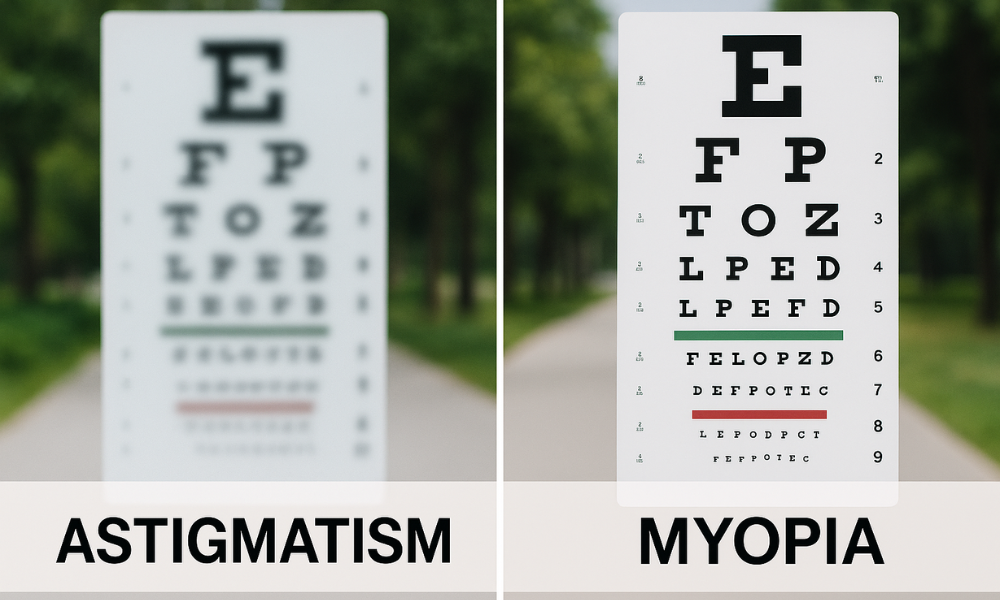
Astigmatism and myopia are two common vision problems. Both are refractive errors, which means light does not focus the right way inside the eye. When this happens, sight becomes blurry, strained, or unclear. Many people mix these two conditions, so the comparison of astigmatism vs myopia is important. Each condition affects vision in a different way and needs a different type of correction.
Myopia makes far objects look blurry. Astigmatism creates blur or distortion at both near and far distances. Understanding this difference helps people notice their symptoms early and get the right eye exam. It also guides them toward the right treatment, like glasses, contact lenses, or other care options. Learning the basics makes it easier to manage eye health and protect long-term vision.
What is Myopia? (Nearsightedness)
Myopia is a vision problem where far objects look blurry but close objects stay clear. It happens when light focuses in front of the retina instead of on it. This focus error starts when the eyeball grows longer than normal or the cornea has extra curve. Research shows that this shape change makes the eye bend light too strongly, causing blur in distance vision.
Myopia often begins in childhood. It can slowly increase as the child grows, then settle later in life. Genetics play a strong role. If one parent has myopia, the child has a higher chance of developing it. Long hours on screens, reading from close range, and little outdoor time also raise the risk. These habits push the eyes to work harder, which may raise myopia levels over time.
Common signs include blurry distance vision, squinting to read far signs, headaches after long visual tasks, and eye strain during outdoor activities. Many people first notice trouble seeing the board in class, street signs, or number plates. An eye exam confirms the degree of myopia and helps find the right correction.
What is Astigmatism?
Astigmatism is a vision problem that comes from an uneven curve in the cornea or the lens. This irregular shape bends light in different directions instead of one clear point. Because of this, vision looks blurry or stretched at all distances. Some people see shadows around letters, or they feel like objects look slightly doubled.
Astigmatism can be present from birth and often runs in families. It may also appear after an eye injury, eye surgery, or changes in the corneal surface. The shape of the eye plays a big part, and even a small change in curve can affect the way light enters the eye.
People with astigmatism often notice blur in both near and far vision. Reading may feel tiring, and focusing for long periods can cause strain. Many struggle with night driving because lights look scattered or streaked. Regular eye exams help find the exact amount of astigmatism so the right correction can be given.
Comparing Astigmatism vs Myopia – Key Differences
Astigmatism and myopia are both common vision problems, but they are not the same. They change the way you see things and each one has its own cause. Knowing the difference helps you understand your symptoms and choose the right eye care.
Effect on Vision
Myopia makes far objects look blurry while close objects stay clear. Astigmatism causes blur at all distances. Things can look stretched, uneven, or doubled because the eye cannot focus light in one clean point.
Anatomical Cause
Myopia happens when the eyeball grows longer than normal or the cornea has extra curve. This makes light focus in front of the retina. Astigmatism happens when the cornea or lens has an uneven shape, so light bends in different directions.
Progression Patterns
Myopia usually starts in childhood and can increase for some years before it settles. Astigmatism can be present from birth and can change at any age. Both can shift over time, but their patterns are different.
Coexistence
Many people have both myopia and astigmatism at the same time. When both are present, the blur becomes stronger. A full eye exam is important so each condition is measured correctly and the right lenses are given.
Diagnosing and Understanding Severity
Getting the right eye check is important for both astigmatism and myopia. An eye exam helps the doctor see how your eyes focus light and how strong each condition is. This makes it easier to choose the best treatment and the right lens power for clear vision.
What Happens During an Eye Exam
During an exam, the doctor checks how well you can read letters from different distances. This shows how clear or blurry your vision is. The doctor also checks the shape of the cornea to see if it is smooth or uneven. In some cases, the length of the eyeball is measured to see if it is longer than normal, which is linked to myopia. These tests give a clear idea of how your eyes focus light.
How Severity Is Measured
Severity is measured in units called diopters. Myopia uses a minus sign to show how strong the blur is. Astigmatism uses cylinder power to show how uneven the curve of the cornea or lens is. Higher numbers mean the condition is stronger and needs more correction.
Why Correct Diagnosis Matters
A correct diagnosis helps choose the right glasses, contacts, or other treatments. Each condition needs its own type of correction, so knowing the exact numbers is important. When the prescription is accurate, vision becomes clear, and eye strain drops. It also helps track changes over time and update the prescription when needed.
Treatment Options for Myopia and Astigmatism
There are many ways to treat myopia and astigmatism. The right option depends on how strong the condition is and how comfortable the person feels with each choice. Some treatments give clear vision, while others help slow the change in vision over time.
Treatment for Myopia
Myopia is usually corrected with glasses or contact lenses. These lenses help focus light on the retina so far objects look clear. Some people use myopia-control methods like orthokeratology lenses that reshape the cornea overnight or low-dose atropine drops to slow the increase of myopia in children. Laser surgery is another option for adults who want long-term correction without glasses.
Treatment for Astigmatism
Astigmatism needs lenses that match the uneven curve of the cornea or lens. Glasses with cylindrical power help fix the distorted light focus. Contact lenses made for astigmatism, called toric lenses, also provide clear vision by staying in the right position on the eye. Laser surgery can also correct the uneven shape and improve focus.
When Both Conditions Are Present
Many people have myopia and astigmatism together. In this case, the prescription must be customised to correct both issues at the same time. Glasses and contact lenses can be designed to fix both errors. If surgery is chosen, the doctor plans it carefully to match both the level of myopia and the amount of astigmatism for clear and stable vision.
Lifestyle, Prevention and Management Tips
Healthy habits can make a big difference for people with astigmatism or myopia. These habits help reduce strain on the eyes and support better vision over time. They are simple steps that fit into daily life and are helpful for both adults and children.
Regular Eye Exams
Regular checkups are important, especially for children and people who spend long hours on screens. Eye exams help catch changes early and make sure the prescription stays accurate. This also helps track how fast myopia is growing and how stable astigmatism is.
Outdoor Time and Less Near-Work
Spending more time outdoors can help slow the rise of myopia. Natural light and distant focusing give the eyes a break from close-up tasks. Limiting long hours of near work, like reading or screen use, also helps support clearer vision and reduce tired eyes.
Proper Lighting and Short Breaks
Good lighting makes it easier for the eyes to focus. Taking short breaks can also reduce eye strain. Many people use the 20-20-20 rule: every 20 minutes, look at something 20 feet away for 20 seconds. This small habit helps both myopia and astigmatism.
Understanding Limits of Prevention
Astigmatism cannot always be prevented because it often comes from the natural shape of the eye. Myopia, however, can sometimes be slowed with the right habits and treatments. Knowing this difference helps you focus on the steps that make the most impact on long-term vision.
When to Seek Professional Help – Red Flags and Long-Term Considerations
Knowing when to get help is important for keeping your eyes healthy. Some signs show that the eyes need quick attention, and ignoring them can lead to stronger vision problems. Paying attention to changes in sight helps protect long-term eye health.
Warning Signs
Sudden changes in vision should not be ignored. This includes double vision, halos around lights, headaches, and trouble seeing clearly at night. Difficulty while driving, especially in low light, is also a sign that the eyes need to be checked soon.
Risks If Untreated
If myopia or astigmatism is not treated, vision can keep getting worse. High myopia can lead to more serious eye issues later in life. Uncorrected astigmatism can cause constant eye strain and discomfort. Early treatment helps avoid these problems and keeps vision stable.
Why Professional Advice Matters
An eye-care specialist can find the exact cause of the problem and give the best plan for correction. Each person’s eyes are different, so professional advice makes sure the treatment fits their needs. Regular checkups also help track changes and adjust the prescription when needed.
Conclusion
Understanding the difference between astigmatism and myopia helps you make better choices for your eye health. Myopia affects distance vision, while astigmatism can blur sight at all distances. Both come from different eye shapes, and both can change over time. The good news is that both conditions are treatable, and many people live normal, comfortable lives with the right correction.
Clear vision starts with a simple step: getting an eye exam. A checkup helps find the exact level of each condition and gives you a plan that fits your needs. Healthy habits like outdoor time, good lighting, and regular breaks also support better long-term vision. When you understand astigmatism vs myopia, you can take better care of your eyes and make choices that keep your sight strong and clear.
Quick Questions People Often Ask
What is The main Difference between astigmatism and Myopia?
Myopia makes far objects blurry, while astigmatism can blur vision at all distances.
Can a Person have Both conditions at The same Time?
Yes, many people have both. A complete eye exam helps measure each one correctly.
Does Astigmatism get Worse with Time?
It can change, but it does not always get worse. Regular checkups help track it.
Can Myopia be Slowed?
Yes, outdoor time, less near work, and some treatments can help slow myopia in children.
Is laser Surgery an Option for Both?
Laser surgery can help treat both conditions, but only after a doctor checks if the eyes are suitable.
Disclaimer: This article shares general information about astigmatism and myopia. It is not a medical diagnosis or treatment guide. For any vision problem, please visit a qualified eye-care specialist. Only a professional can check your eyes and give the right advice for your personal needs.
Enjoyed reading? Check my website for more useful and unique content: Old Welwyn Herts