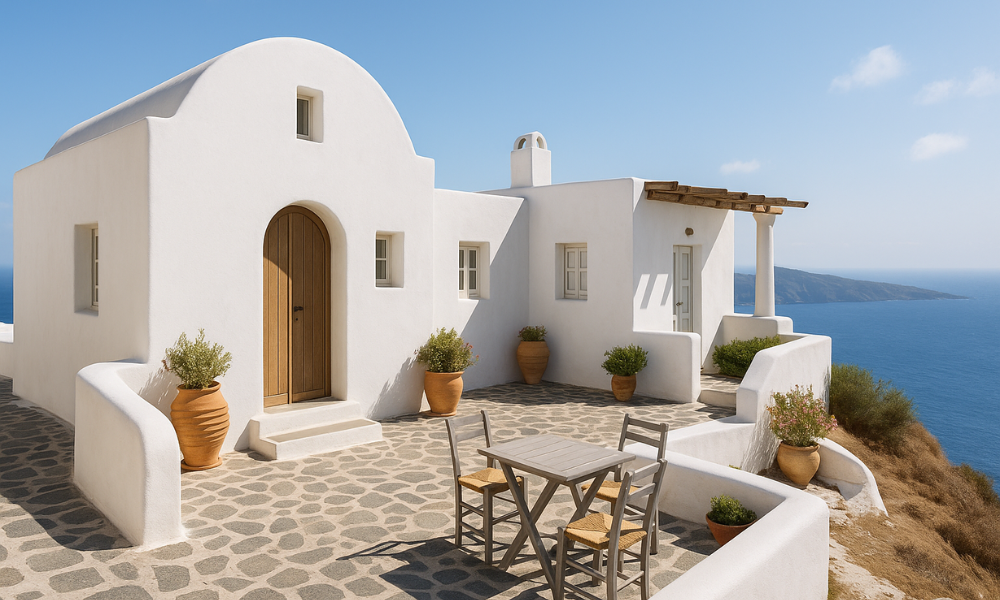
Greek houses have a very calm and simple feel. Many people search for them because they want a home style that looks clean, bright and peaceful. When we talk about greek houses, we look at how old Greek homes were built and how this style still inspires new homes around the world. The look is easy to love. White walls, open space, sunlight and a close link with nature.
Greek houses matter today because people want homes that feel open and relaxed. Many like designs that let in fresh air, soft light and a connection with the outdoors. Greek houses also teach us how simple design can create comfort without needing expensive ideas or complicated plans.
In this article, we will look at what greek houses are, how they started, how they were made, how people use this style today and how you can add this look to your own space. You will get a clear picture of the layout, structure and design choices that make greek houses stand out.
Origins of Greek Houses – From Bronze Age to Classical Era
Early Greek homes were simple and small. Most houses had only a few rooms and a very basic layout. Walls were made from mud brick or stone, and the roofs used wood and clay tiles. Families lived in small groups, so the house did not need many sections. The spaces were plain and practical. People cooked, slept and stored items in the same shared area. Life was simple, so the homes were simple too.
As time moved forward, the idea of a courtyard became very important. This open area sat in the middle of the house. It brought in air, sunlight and a safe private space. The courtyard became the heart of greek houses. Families used it for daily tasks, gatherings and even small household rituals. It also helped the home stay cool during hot days. This courtyard style became one of the most known features of greek houses.
Greek homes also followed a social structure. Different parts of the house had separate uses. The “andron” was a room for men and guests. It was used for small gatherings or meals with visitors. The “gynaikeion” was the private area for women and children. This space kept family life quiet and separate from the guest area. This zoning showed the family values of that time. Each area had a clear purpose, and the layout reflected the rules of daily life.
Standard Layout & Key Components of a Greek House
The most important feature in greek houses was the courtyard. It sat right in the center of the home. It brought fresh air, sunlight and an open feel to the entire space. Families used it for daily activities like eating, talking and simple tasks. This space also helped keep the house cool during warm weather. The courtyard made the home feel alive and open even when the rooms were small.
Around the courtyard, you would find the main rooms. Most greek houses had a kitchen for cooking, a storage room for food or tools, a guest room and small sleeping areas. These rooms were plain but useful. They were built to serve simple needs. Most tasks were done close to the courtyard, so the rooms stayed easy to reach. The layout made life smooth for the family living inside.
Greek houses also had special rooms for certain groups or activities. The andron was the guest area where men hosted visitors. It had a clean and neat look because it was used for small gatherings or meals. The gynaikeion was the private family space. This is where women and children stayed. It kept family life away from the guest area for privacy and comfort.
In many urban homes, small workshops or shops were attached to the front of the house. People used these spaces to run small trades or sell goods. This made greek houses part of the daily city life. Homes were not only living spaces, but also places where families worked and earned their income. The layout mixed home life and work life in a simple and practical way.
Materials, Climate and Local Adaptation
Greek houses used simple and strong materials. Builders used stone, mud brick, wood and clay tiles. These materials were easy to find and worked well with the local environment. Stone walls kept the home stable, while mud brick helped control indoor warmth. Roofs made with clay tiles kept rain out and added a simple, clean look. The construction style was practical. It focused on strength, comfort and long-lasting use.
The climate shaped the full design of greek houses. Greece has warm summers and mild winters, so homes needed good airflow and soft light. The courtyard helped with this. Open areas allowed air to move through the house and keep rooms cool. Windows and doors were placed to bring in natural light while blocking harsh heat. Many homes faced a direction that caught cool breezes and morning light. This made the indoor space calm, bright and pleasant through the day.
Modern greek houses still follow many of these ideas. Homes on hillsides use terraces that open to sea views. White walls reflect sunlight and keep the inside cool. Builders use stone and concrete to give the home a clean and strong look. Large openings connect the rooms with outdoor space. The style keeps the same peaceful feeling you see in old greek houses, but with a modern touch. This blend of old and new makes the design popular for people who want natural beauty and simple comfort.
Greek Houses in the Modern Era – Continuity and Change
Modern greek houses still carry the same calm and open feeling that old homes had. Many new homes borrow ideas from classic greek design but shape them in a way that fits today’s needs. Builders use simple forms, bright walls and natural materials, which keep the look clean and peaceful. Large windows bring in soft light. Courtyards and terraces stay as important parts of the design. These elements help new homes keep that classic Greek charm.
Greek design language also plays a strong role in modern homes. You can still see the love for balance, clear lines and neat proportions. Columns appear in a lighter way, more for beauty than structure. Minimalism is a core idea. Rooms stay uncluttered and open. Colors stay soft and natural. These choices come from old Greek style but fit well with modern taste. The result is a home that feels both timeless and fresh.
Homeowners also try to find the right balance between heritage and comfort. They want the simple beauty of old greek houses but also modern features like open kitchens, full bathrooms and better storage. Architects blend both sides. They keep the peaceful outdoor spaces, strong materials and soft light, but add modern layouts that work for daily life. This balance keeps greek houses alive in today’s world while giving people a space that feels warm, functional and rooted in history.
Why the Appeal of Greek Houses Today
People love greek houses because the style feels calm, simple and close to nature. The clean white walls, open terraces and wide views create a soft and peaceful mood. Many homes sit near the sea or on hills, so you get clear sky and water views right from the house. This connection with the outdoors makes the home feel fresh and alive. The design does not try to impress with heavy details. It stays honest, open and easy on the eyes.
Greek houses also offer practical comfort. Light enters the rooms in a soft way, and the open layout helps air move through the home. This natural flow keeps the space cool in warm weather. Courtyards, balconies and terraces create smooth indoor-outdoor movement. You can step outside with ease and enjoy sunlight or fresh air at any time. The simple layout helps families use the space without feeling crowded. Everything feels open but still private.
There is also a cultural pull toward this style. Greek houses carry a strong sense of tradition. The materials, colors and layout connect the home to its roots. Living in a greek-style house gives you a feeling of belonging and history. It feels real and grounded. Designers and home-buyers take a lot of inspiration from this style because it blends beauty, comfort and meaning. Greek houses show how a simple design can create a home that feels warm, natural and full of character.
How to Incorporate Greek House Elements into Your Own Home or Design
You can bring the feel of greek houses into your home in simple ways. Start with open space and clean lines. Try to keep rooms free from heavy furniture and dark clutter. Choose a layout that feels calm and easy to move through. Add one main outdoor area like a small courtyard, patio or balcony where you can sit, relax and enjoy fresh air. Even a small corner with plants and a chair can copy the feeling of a Greek courtyard.
For materials and colours, keep things natural and light. Use white or soft cream for walls. Add touches of blue, sand, stone grey or earthy brown. These colours match the sea, sky and land that you see around many greek houses. Wood, stone and simple metal work well for floors, doors, windows and details. Terracotta pots, woven baskets and plain linen fabrics also add a soft Greek look without feeling fake.
You can also use layout ideas from greek houses. Place living areas so they open toward light and air. If possible, let your main sitting room connect to a terrace, balcony or garden. Keep private rooms like bedrooms slightly away from busy zones. Create small, clear sections for rest, cooking, work and guests. This zoning helps the house feel ordered but not strict. Each part has a clear purpose, just like in classic Greek homes.
Climate-friendly design is another key lesson from greek houses. Try to let air cross through your home by placing windows on two sides of a room. Use light curtains that move with the breeze instead of heavy dark ones. Add shade through overhangs, pergolas or simple awnings so strong sun does not heat the inside too much. Light colours on walls and roofs help reflect heat. These small choices make your home more comfortable and also echo the cool, relaxed spirit of greek houses.
Conclusion
Greek houses started as simple, practical homes in ancient times. They used stone, mud brick and open courtyards to create comfort in a warm climate. Over the years, the style grew but the core idea stayed the same. A greek house feels open, bright and close to nature. Modern homes still use these ideas with new materials, sea-view terraces and clean shapes that match today’s needs. The journey from old courtyard homes to modern hillside designs shows how strong and useful this style has always been.
The lessons from greek houses remain valuable today. Use natural light. Let air move through your rooms. Keep the layout simple and the colours soft. Connect your home with the outdoors. Focus on calm spaces instead of heavy decoration. These choices make a home feel warm, peaceful and easy to live in. The Greek approach shows that comfort does not need to be complicated. Good design can come from honest materials and clear spaces.
As you think about your own home, imagine how small touches of greek houses can change the feeling of your space. A bright wall, a simple terrace, a natural material or a soft colour palette can bring that calm Greek charm into daily life. You do not need to rebuild your full house. Even one idea can bring a fresh, open and peaceful mood that reflects the spirit of greek houses.
Common Questions People Ask
What Makes Greek Houses Different from other Home Styles?
Greek houses focus on simple shapes, bright walls and open spaces. The design brings in fresh air and soft light. The look stays clean and natural without heavy decoration.
Why do Greek Houses use white Walls?
White walls help keep the house cool by reflecting sunlight. They also create a bright and calm look that matches the outdoor landscape.
Are Courtyards Still used in modern Greek Houses?
Yes, many modern homes still use courtyards, patios or terraces. These spaces help with airflow and give a relaxing outdoor area that feels connected to the home.
Can I add Greek House elements to a Small Home?
Yes, you can add simple touches like light colours, natural materials, open shelves, plants or a small outdoor corner. Even small changes can bring a Greek-style feel.
Why do Designers get Inspiration from Greek Houses?
Designers like the clear layout, natural light and peaceful mood. The style blends comfort with beauty and works well for both modern and traditional homes.
Disclaimer: This article shares general information about greek houses and is for learning and inspiration only. It is not professional architectural or construction advice. Design choices, building methods and materials can vary based on location, budget and personal needs. Always consult a qualified expert before making any major home or building decisions.
Enjoyed reading? Check my website for more useful and unique content: Old Welwyn Herts